
Table of Contents
- Introduction: Navigating Digital Forensics in Damascus
- Understanding Digital Forensics Services in Damascus for Modern Enterprises
- How to Choose the Right Technical Forensic Solution
- Step-by-Step Incident Response & Forensics Playbook
- Enterprise Case Study: Mitigating Cyber Intrusion in Damascus
- Frequently Asked Questions

Introduction: Navigating Digital Forensics in Damascus
As the commercial landscape in Syria undergoes accelerated digital transformation in 2026, enterprise networks in banking, telecommunications, trade, and government infrastructure face increasingly sophisticated cyber threats. Protecting critical infrastructure and sensitive corporate assets requires robust specialized digital forensics services in Damascus to detect unauthorized access, identify data breaches, and preserve court-admissible digital evidence. Whether an organization is dealing with an active ransomware infection, corporate espionage, or unauthorized data exfiltration, having a structured forensic capability is mandatory for business continuity and risk management.
Modern threat actors employ evasive techniques such as living-off-the-land (LotL) binary execution, fileless malware, and encrypted exfiltration channels. Relying solely on conventional antivirus solutions or standard IT monitoring leaves organizations vulnerable to undetected persistent threats. By engaging advanced digital forensics services in Damascus, executive leaders gain deep visibility into network artifacts, endpoint memory, and compromised user identities, enabling rapid threat containment and definitive root-cause analysis.
Understanding Digital Forensics Services in Damascus for Modern Enterprises
Digital Forensics and Incident Response (DFIR) is a discipline that bridges technical cybersecurity with legal compliance. For organizations operating across the Levant region, leveraging professional digital forensics services in Damascus provides a systematic framework to reconstruct cyber incidents down to the precise millisecond. Rather than merely cleaning an infected machine, digital forensics answers critical executive questions: How did the attacker breach the perimeter? What specific files were accessed or stolen? And how can similar vectors be closed permanently?
When selecting a technical forensic partner or implementing an in-house forensic strategy, enterprise decision-makers must align technical methodologies with established international standards. Combining local expertise with regional benchmarks, such as global digital forensics and cyber incident response standards, helps ensure that corporate investigations remain rigorous, non-disruptive, and thoroughly documented.
Core Technical Components of Forensic Investigation
A comprehensive forensic capability spans multiple technical domains across an organization’s hybrid infrastructure. High-caliber digital forensics services in Damascus typically encompass the following core disciplines:
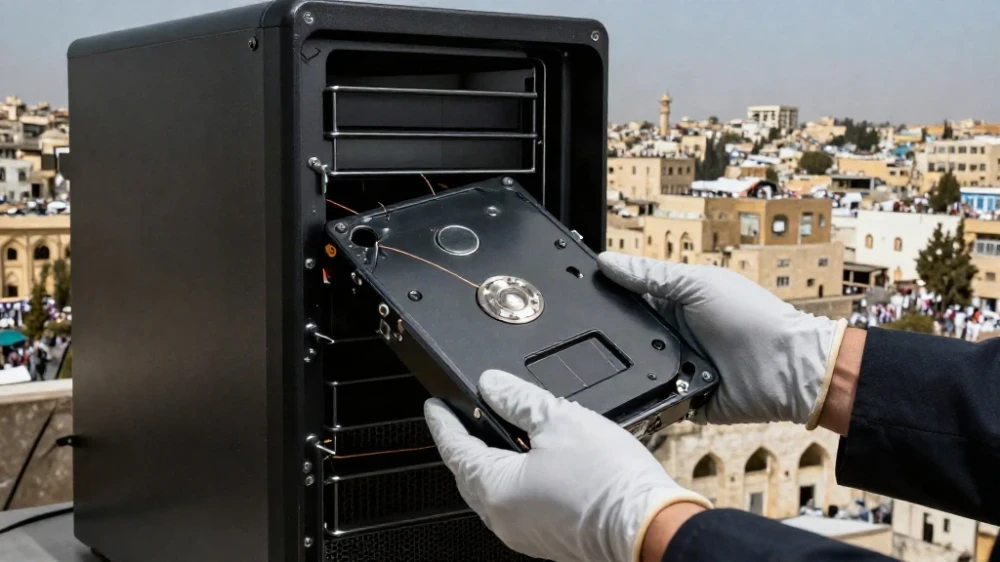
- Disk and Storage Media Forensics: Bit-stream imaging and examination of hard disk drives (HDDs), solid-state drives (SSDs), NVMe storage, and RAID arrays to recover deleted files, unallocated space, and hidden partitions.
- Memory Forensics (RAM Analysis): Acquisition and technical inspection of volatile system memory to extract injected DLLs, unencrypted encryption keys, active process trees, and fileless payload artifacts before system reboots.
- Network Forensics: Packet-level analysis, NetFlow inspection, and firewall log reconstruction to map lateral movement, command-and-control (C2) communication protocols, and unauthorized data exfiltration pipelines.
- Cloud and Virtualization Forensics: Specialized investigation of cloud tenant environments, containerized workloads, hypervisors, and SaaS audit logs to identify API abuse and privilege escalation.
- Mobile and IoT Forensics: Forensic extraction and decoding of encrypted mobile OS platforms, corporate tablets, and edge IoT devices connected to enterprise operational networks.
Chain of Custody and Evidence Admissibility
A fundamental differentiator between routine IT troubleshooting and formal digital forensics is strict adherence to the forensic chain of custody. Any digital artifact gathered during an investigation must remain untampered from the exact second of acquisition through final judicial or executive reporting. To meet stringent legal requirements, professional digital forensics services in Damascus implement cryptographic hashing algorithms (such as SHA-256) immediately upon capturing volatile or non-volatile data.
According to the National Institute of Standards and Technology (NIST) guidelines on digital evidence handling, preserving data integrity demands controlled write-blockers, write-once media, and rigorously maintained access logs. Failing to observe these protocols risks invalidating evidence in arbitration, employment disputes, or legal actions against malicious actors.

How to Choose the Right Technical Forensic Solution
Selecting the optimal forensic solution or vendor is a high-stakes decision for chief information security officers (CISOs), chief technology officers (CTOs), and legal counsel. Evaluating digital forensics services in Damascus requires evaluating both hardware/software capabilities and team expertise.
Deep Volatile Memory & Disk Analysis Capabilities
Threat actors operating in 2026 frequently bypass file-based detection mechanisms by maintaining persistence directly within system memory. A qualified forensic solution must support advanced RAM extraction across legacy platforms as well as modern unified endpoint management architectures. When reviewing capabilities, ensure the technical team utilizes industry-standard tools such as Volatility Framework, EnCase, FTK (Forensic Toolkit), and X-Ways Forensics for deep physical drive parsing.
Furthermore, effective digital forensics services in Damascus must be adept at parsing modern file systems (such as NTFS, EXT4, APFS, and ZFS), analyzing complex system artifacts including Windows Registry hives, Master File Tables ($MFT), Shimcache, Amcache, and event log repositories.
Rapid Incident Triage and Local On-Site Readiness
Time is the most critical variable during an active cyber intrusion. Delayed response directly correlates with increased operational downtime, expanded threat actor dwell time, and greater financial impact. Enterprise-grade digital forensics services in Damascus must offer defined Service Level Agreements (SLAs) for both remote triage and physical on-site deployment.
Remote forensic triage tools—such as Velociraptor or enterprise Endpoint Detection and Response (EDR) agents—allow forensic analysts to deploy volatile data collectors across thousands of endpoints within minutes. However, when critical systems are air-gapped or physically compromised, local on-site teams equipped with portable write-blockers and hardware imaging kits must be readily available.
Mitigating Ransomware and Complex Insider Threats
While external cybercriminals present a major threat, internal misuse—such as intellectual property theft, unauthorized administrative credential escalation, and intentional data deletion—presents equal enterprise risk. Specialized digital forensics services in Damascus provide target-neutral insider threat detection. Forensic examiners can reconstruct user activity timelines, correlate USB device insertion histories, analyze browser artifacts, and decrypt log files to prove or disprove internal bad actor involvement conclusively.
Step-by-Step Incident Response & Forensics Playbook
Deploying digital forensics capabilities effectively requires an established playbook before an incident occurs. Below is the operational framework recommended for Damascus-based enterprises seeking to maintain high forensic readiness.
| Phase | Operational Focus | Key Deliverables & Actions |
|---|---|---|
| Phase 1: Preparation | Forensic Readiness & Logging Policies | Implement centralized syslog aggregation, enforce multi-factor authentication (MFA), establish cryptographic retention schedules, and pre-negotiate forensic SLAs. |
| Phase 2: Identification & Triage | Anomaly Detection & Scope Definition | Identify suspicious indicators of compromise (IOCs), isolate affected subnets, execute remote memory triage, and establish a secure command center. |
| Phase 3: Containment & Evidence Capture | Forensic Preservation | Deploy hardware write-blockers, capture bit-stream images of endpoints and servers, log network traffic, and maintain strict chain of custody documentation. |
| Phase 4: Analysis & Reconstruction | Timeline & Root Cause Analysis | Parse master file tables, perform malware reverse engineering, trace C2 communications, and map adversary TTPs to the MITRE ATT&CK framework. |
| Phase 5: Remediation & Reporting | Eradication & Executive Reporting | Close vulnerability vectors, purge unauthorized credentials, restore systems from verified gold-standard backups, and issue comprehensive legal and executive reports. |
Integrating professional digital forensics services in Damascus across these five phases ensures that emergency responses are methodical rather than reactive, drastically reducing mean time to detect (MTTD) and mean time to respond (MTTR).
Enterprise Case Study: Mitigating Cyber Intrusion in Damascus
To understand the business value of professional forensic capabilities, consider a representative enterprise scenario in the regional commercial sector. In early 2026, a major supply chain operator headquartered in Damascus experienced suspicious lateral network traffic during non-business hours, accompanied by localized file encryption attempts on secondary storage servers.
Rather than simply restarting infected virtual machines—which would have destroyed critical volatile memory artifacts—the internal IT leadership immediately engaged expert digital forensics services in Damascus. The external forensic team implemented live memory acquisition via remote scripts and preserved the physical state of the affected hypervisor hosts.
The forensic investigation revealed that the attackers had gained access three weeks prior through a compromised third-party VPN account lacking MFA enforcement. Utilizing forensic timeline reconstruction, analysts discovered that the adversary used living-off-the-land techniques (PowerShell scripts and WMI queries) to perform network reconnaissance before attempting to deploy ransomware. By leveraging specialized digital forensics services in Damascus, the enterprise contained the breach within four hours, prevented full database encryption, revoked compromised credentials, and saved millions in potential operational downtime and ransom demands.

Frequently Asked Questions
What industries in Damascus benefit most from specialized digital forensics?
While all digitized businesses require security, organizations operating in financial services, telecommunications, government administration, logistics, and healthcare derive critical value from specialized digital forensics services in Damascus. These sectors manage highly sensitive personal data and financial transactions, making them primary targets for cyber extortion and insider threats.
How does proper chain of custody impact legal proceedings?
Proper chain of custody guarantees that digital evidence presented in legal disputes, corporate arbitrations, or law enforcement proceedings is authentic and unmodified. Trusted digital forensics services in Damascus adhere to international ISO/IEC standards, using cryptographic hashing and verified evidence logs to ensure that extracted files, logs, and artifacts are fully admissible in court.
How fast can a technical team respond to a live ransomware attack in Damascus?
Reputable digital forensics services in Damascus offer rapid-response SLAs that initiate remote triage and volatile data capture within 1 to 2 hours of notification. On-site technical teams can be deployed locally to secure physical servers and isolated network segments promptly, minimizing dwell time and mitigating ongoing damage.