Table of Contents
- The Evolution of Digital Investigations in 2026
- Comparing Core Methodologies in Modern Digital Forensics Services
- Enterprise Software Comparison: EnCase, FTK, and Magnet AXIOM
- Open-Source and Memory Forensics Frameworks: Volatility, Autopsy, and Wireshark
- Selecting the Right Digital Forensics Services for Enterprise Security
- Real-World Application: Ransomware and Insider Threat Analysis
- Frequently Asked Questions
The Evolution of Digital Investigations in 2026
As corporate IT infrastructures become increasingly decentralized across multi-cloud environments, remote endpoints, and complex hybrid networks, cyber threats have scaled in sophistication. Enterprise security breaches are no longer simple virus infections; they are highly coordinated, multi-stage attacks orchestrated by advanced persistent threat (APT) groups and organized ransomware syndicates. In 2026, relying on professional digital forensics services to investigate breaches, identify root causes, and preserve legal evidence has become a critical operational requirement for modern enterprises.
When an incident occurs, organization leaders must rapidly determine the extent of compromised data, identify how adversaries breached perimeter defenses, and establish whether sensitive intellectual property or personally identifiable information (PII) was exfiltrated. Selecting professional digital forensics services equips enterprises with the specialized frameworks, verified software solutions, and legal-grade analytical methodologies necessary to turn complex, non-volatile binary artifacts into clear, actionable intelligence.
Comparing Core Methodologies in Modern Digital Forensics Services
Digital forensics encompasses several distinct disciplines, each tailored to isolate specific types of artifacts across an enterprise topology. Selecting the appropriate technique depends on whether the goal is live incident containment, historical root-cause analysis, or legal evidence gathering. When engaging top-tier digital forensics services, organizations benefit from a multi-layered investigative approach combining four core technical methodologies.
1. Dead-Box (Disk) Forensics
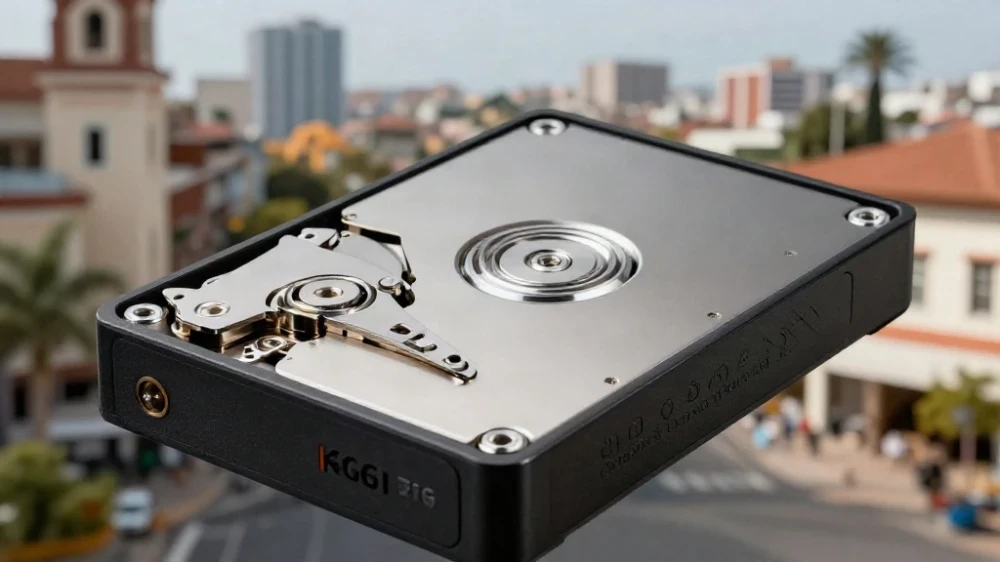
Disk forensics focuses on analyzing non-volatile storage devices, such as NVMe drives, traditional Hard Disk Drives (HDDs), and Solid-State Drives (SSDs). Analysts acquire bit-stream physical images (e.g., E01 or RAW formats) of the target media to ensure data integrity. Disk forensics allows investigators to recover deleted files, inspect unallocated space, parse file system journals (NTFS $MFT, EXT4 log, APFS journal), and trace historical software executions through registry hives and event logs. While highly detailed and legally defensible, dead-box analysis represents a static snapshot and cannot capture active malware running purely in memory.
2. Volatile Memory (RAM) Forensics
Modern cyber adversaries increasingly utilize fileless malware, living-off-the-land (LotL) binaries, and injected code residing exclusively in system RAM. Volatile memory forensics captures physical RAM before a machine is powered down or restarted. By analyzing process structures, kernel objects, network sockets, and injected DLLs, investigators can identify active command-and-control (C2) channels, decrypt payloads, and extract plain-text passwords or cryptographic keys. RAM analysis is time-sensitive and requires strict live acquisition procedures to prevent artifact contamination.
3. Network Forensics
Network forensics involves capturing, recording, and analyzing network traffic patterns and packet payloads (PCAP) to detect malicious activity across internal segments and perimeter firewalls. By correlating NetFlow data, DNS request logs, SSL/TLS handshake metadata, and full-packet captures, forensic engineers can trace lateral movement within an enterprise network and verify whether data exfiltration occurred. Network forensics provides indispensable timeline context when endpoints have been wiped or damaged by destructive malware.
4. Cloud and Hybrid Environment Forensics
With cloud adoption dominating enterprise infrastructure in 2026, cloud forensics addresses decentralized workloads, serverless architectures, and SaaS applications. Unlike traditional disk imaging, cloud investigations rely heavily on API log ingestion, unified audit trails (e.g., AWS CloudTrail, Azure Monitor, Google Cloud Audit Logs), and ephemeral storage snapshots. Cloud forensics requires specialized understanding of identity and access management (IAM) permission models, tenant isolation, and containerized environments like Kubernetes.
Enterprise Software Comparison: EnCase, FTK, and Magnet AXIOM
Enterprise-grade digital forensics services deploy specialized software suites capable of processing terabytes of data across distributed file systems. The market features several flagship commercial platforms, each offering unique performance characteristics, indexing capabilities, and integration profiles.
| Tool / Platform | Primary Strengths | Key Focus Areas | Best Enterprise Use Case |
|---|---|---|---|
| OpenText EnCase | Deep disk imaging, extensive file system support, strict chain-of-custody tracking. | Disk forensics, endpoint investigation, legal compliance. | Large-scale corporate litigation and legal discovery. |
| Exterro FTK (Forensic Toolkit) | Distributed processing, lightning-fast database indexing, multi-core architecture. | Mass data processing, index searching, memory parsing. | Complex enterprise investigations involving terabytes of raw data. |
| Magnet AXIOM | Seamless artifact correlation across disk, cloud, mobile, and memory sources. | Artifact analysis, timeline visualization, cloud log parsing. | Integrated multi-platform investigations and incident response. |
Providers of digital forensics services rely heavily on OpenText EnCase for its unmatched evidentiary rigor and accepted court standards. EnCase excels at low-level drive analysis and structured reporting. However, its processing speed can lag when analyzing massive, unindexed datasets. In contrast, Exterro FTK leverages a centralized database architecture (PostgreSQL/Oracle) to index files upfront, allowing forensic teams to search millions of unallocated sectors in seconds. Magnet AXIOM has emerged as an industry leader due to its artifact-centric philosophy, automatically linking mobile communications, cloud storage logs, and desktop browser histories into a unified interactive timeline.
Open-Source and Memory Forensics Frameworks: Volatility, Autopsy, and Wireshark
While commercial suites dominate heavy processing, open-source and specialized tools remain essential for memory analysis, rapid triage, and packet inspection. Elite forensic engineers combine commercial platforms with open-source tools to validate findings and perform deep binary analysis.
Volatility Framework
Volatility is the world’s most widely recognized framework for volatile memory extraction and analysis. Operating as a modular command-line tool, Volatility enables analysts to extract memory dumps from Windows, Linux, and macOS systems. Investigators use Volatility to inspect active process trees (`pslist`, `pstree`), spot hidden processes (`psxview`), detect code injections (`malfind`), and extract network connection artifacts (`netscan`). Its ability to inspect raw kernel memory makes it indispensable for identifying zero-day exploits and rootkits.
Autopsy and Sleuth Kit
Autopsy is a digital forensics platform powered by the underlying Sleuth Kit engine. It provides an intuitive graphical interface for disk analysis, keyword searching, web artifact extraction, and hash filtering against known malicious database libraries (such as the National Software Reference Library – NSRL). While often utilized by law enforcement and academic researchers, Autopsy provides enterprise response teams with an efficient option for secondary verification and independent data auditing.
Wireshark and Zeek (formerly Bro)
For network packet analysis, Wireshark serves as the standard interactive protocol analyzer, allowing deep inspection of individual network packets, reassembly of TCP streams, and protocol decoding. For enterprise-scale traffic monitoring, response teams utilize Zeek, an open-source network security monitoring framework that translates raw packet streams into structured, queryable domain logs. Combining Zeek transaction logs with Wireshark packet captures allows investigators to quickly trace malicious file transfers across internal subnets.

Selecting the Right Digital Forensics Services for Enterprise Security
Investing in technical tools is only one part of an effective incident response strategy. To ensure investigations yield legally defensible results that satisfy regulatory standards, corporate legal counsel, and cyber insurance providers, organizations must partner with experienced external investigators. Outsourcing to specialized digital forensics services ensures legal admissibility, prevents internal conflict of interest, and brings battle-tested experience to high-stakes breaches.
To establish baseline standards for forensic tool validation, leading investigative teams adhere to the official NIST Computer Forensic Tool Testing initiative, which evaluates tool accuracy and evidentiary reliability under rigorous laboratory conditions.
When selecting leading digital forensics services, security leaders should evaluate several technical and operational criteria:
- Chain of Custody Rigor: Verifying that the service provider follows strict evidentiary controls, utilizing cryptographic hashing (SHA-256) upon acquisition to prove data has remained untampered throughout the analysis cycle.
- Certifications and Expertise: Ensuring investigators hold recognized industry credentials, such as GIAC Certified Forensic Examiner (GCFE), GIAC Certified Forensic Analyst (GCFA), or Certified Computer Examiner (CCE).
- Rapid Incident Containment: Confirming the provider can deploy remote triage collection agents immediately across global enterprise endpoints to preserve volatile evidence before it is overwritten.
- Jurisdictional Compliance: Ensuring full alignment with regional data protection regulations, such as Saudi Arabia’s Personal Data Protection Law (PDPL) and international privacy frameworks.
For organizations seeking certified corporate investigation and incident response capabilities tailored to regional regulatory requirements, partnering with a trusted digital forensics company in Riyadh provides dedicated local expertise backed by global threat intelligence.
Real-World Application: Ransomware and Insider Threat Analysis
To understand the practical impact of advanced tools and techniques, consider how specialized teams apply them across two common enterprise security crises: ransomware attacks and insider data theft.
Scenario A: Human-Operated Ransomware Investigation
In a human-operated ransomware incident, threat actors gain initial access through compromised VPN credentials, establish persistence via PowerShell scripts, move laterally using SMB/RDP, and exfiltrate sensitive files before deploying encryptors across domain controllers. Retaining robust digital forensics services can mean the difference between catastrophic business interruption and controlled recovery.
In this scenario, forensic engineers apply a multi-faceted strategy:
- Volatile Memory Triage: RAM dumps from targeted domain controllers are parsed with Volatility to extract LSASS memory contents, identifying injected lateral movement binaries and stolen Kerberos tickets.
- Event Log & MFT Parsing: Using FTK and Magnet AXIOM, analysts parse Windows Event Logs (Event ID 4624 logon events, Event ID 7045 service creations) and Master File Table ($MFT) records to pin down the exact moment of initial entry.
- Network Traffic Analysis: Zeek log analysis identifies large outbound encrypted HTTPS sessions, quantifying the volume of exfiltrated data to satisfy regulatory reporting duties.
Through this systematic methodology, expert digital forensics services reconstruct the exact attack timeline, allowing the engineering team to close entry vectors, revoke compromised active directory keys, and safely restore operations without risking re-infection.
Scenario B: Insider Threat and Intellectual Property Theft
When a departing executive is suspected of stealing proprietary source code, network perimeter firewalls may show no anomalies because the insider used legitimate privileges. Here, traditional signature detection fails, and deep endpoint forensics becomes paramount.
Forensic investigators apply dead-box disk analysis and registry parsing using EnCase and X-Ways Forensics:
- USB Artifact Analysis: Analysts inspect registry keys (`USBSTOR`, `MountedDevices`) and system log files to identify specific external serial numbers connected to the workstation.
- Shellbags and LNK File Parsing: Investigators analyze Windows Shellbags and Shortcut (.LNK) files to demonstrate that the user actively navigated into confidential folders on an external drive.
- Browser and Cloud Audit Logs: Corroborating endpoint findings with enterprise SaaS audit logs confirms whether files were simultaneously uploaded to personal cloud storage accounts.

Frequently Asked Questions
What is the difference between disk forensics and memory forensics?
Disk forensics focuses on analyzing non-volatile storage devices (like hard drives and SSDs) to recover saved files, system logs, and deleted data. Memory forensics analyzes volatile RAM to capture active processes, network connections, running code injections, and unencrypted keys that disappear when the machine powers off.
Why should enterprise organizations hire external digital forensics services?
Engaging professional digital forensics services provides independent expertise, specialized enterprise tools, and legally defensible evidence handling protocols. External forensic teams ensure that data collection adheres to strict chain-of-custody standards required by courts, regulatory bodies, and cyber insurance providers.
How do digital forensics services preserve the chain of custody?
Professional digital forensics services preserve the chain of custody by generating cryptographic hash values (such as SHA-256) for raw drives and images immediately upon acquisition. Any working copy created during analysis must match the original hash signature, proving that evidence has not been modified or corrupted during the investigation.