
Table of Contents
- Introduction to Cybersecurity Challenges in Syria
- Why Penetration Testing Services in Syria are Crucial in 2026
- Comparative Framework: Traditional vs. Modern Assessment Methodologies
- Network-Level Assessments: Comparative Analysis of Vulnerability Scanners
- Web Application Security: Comparing Dynamic and Static Testing Tools
- Social Engineering & Physical Testing: Human-Centric Security Assessments
- Regulatory Alignment and Compliance Frameworks
- Choosing the Right Penetration Testing Partner for Syrian Businesses
- Frequently Asked Questions (FAQs)
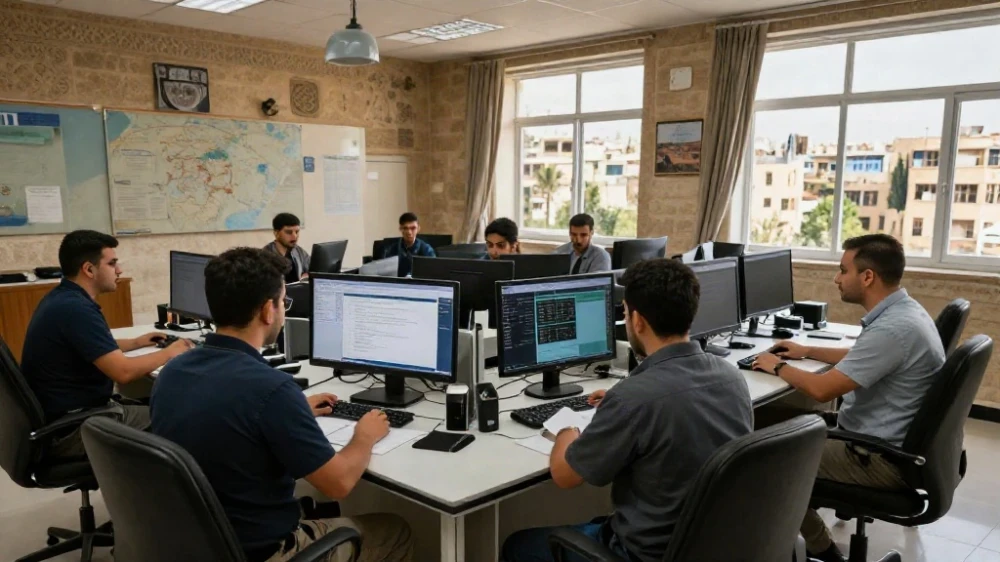
Introduction to Cybersecurity Challenges in Syria
The digital landscape of Syria has undergone a rapid transformation in recent years. As businesses, financial institutions, and telecommunication providers transition toward comprehensive digital infrastructures, they simultaneously expose themselves to highly sophisticated cyber threats. Operating in a unique geopolitical environment, Syrian organizations face complex security challenges ranging from state-sponsored cyber espionage to targeted ransomware campaigns and localized financial fraud.
Securing these digital assets requires more than standard firewalls and basic antivirus software. It demands proactive, aggressive, and continuous security assessments to identify vulnerabilities before malicious actors can exploit them. Consequently, seeking professional Penetration Testing Services in Syria has emerged as a fundamental pillar for modern corporate risk management and operational continuity in 2026.
Why Penetration Testing Services in Syria are Crucial in 2026
Modern cybersecurity is no longer a defensive game of patching vulnerabilities as they appear. Threat actors now leverage automated artificial intelligence and advanced scanning techniques to discover system weaknesses in real time. In this environment, relying on passive defense systems is a recipe for catastrophic data breaches.
By employing professional Penetration Testing Services in Syria, organizations can simulate real-world cyberattacks on their networks, applications, and cloud environments. This active simulation uncovers hidden misconfigurations, zero-day vulnerabilities, and weak access controls. Rather than waiting for an actual breach to occur, businesses can remediate their security flaws proactively, preserving customer trust, avoiding massive recovery costs, and ensuring compliance with emerging digital data laws.

Comparative Framework: Traditional vs. Modern Assessment Methodologies
When evaluating how to conduct security assessments, organizations must understand the distinction between various testing methodologies. To choose the right approach, we must compare the three fundamental testing perspectives: Black Box, Gray Box, and White Box testing.
| Testing Type | Information Provided to Tester | Simulated Threat Actor | Best Suited For |
|---|---|---|---|
| Black Box | None (Only public domain name or IP) | External hacker with no insider access | Testing perimeter defense and external exposure |
| Gray Box | Limited (User-level credentials, basic architecture) | Disgruntled employee, partner, or malicious insider | Web applications, APIs, and internal networks |
| White Box | Full (Source code, network diagrams, configs) | Privileged administrator or core developer | Comprehensive code audits and critical systems |
For organizations seeking comprehensive Penetration Testing Services in Syria, utilizing a hybrid model that combines Gray Box and Black Box methodologies often yields the highest return on investment. This approach provides a realistic view of external attack paths while ensuring internal application logic is thoroughly scrutinized.
Network-Level Assessments: Comparative Analysis of Vulnerability Scanners
The foundation of any robust security posture begins at the network perimeter. Network penetration testing focuses on identifying open ports, misconfigured routers, vulnerable firewalls, and legacy protocols. To conduct these assessments effectively, cybersecurity professionals rely on a mixture of commercial and open-source scanning tools.
Nmap vs. Nessus: The Battle of Network Discovery and Vulnerability Scanning
For network discovery, Nmap (Network Mapper) remains the undisputed gold standard. It is an open-source tool used for network discovery and vulnerability scanning. Security experts utilize its scripting engine (NSE) to write custom scripts for detecting specific CVEs. Its lightweight nature makes it highly customizable and indispensable for initial mapping stages.
Conversely, Nessus, developed by Tenable, is a highly sophisticated, commercial vulnerability scanner. Unlike Nmap, Nessus provides automated compliance checks, deep vulnerability scanning, and clear remediation pathways. While Nmap requires significant manual expertise to interpret, Nessus generates executive-level reports detailing threat severities based on the Common Vulnerability Scoring System (CVSS).
Employing professional Penetration Testing Services in Syria guarantees that your infrastructure is analyzed using these advanced toolsets under the supervision of certified engineers, ensuring that scanning activities do not disrupt critical production environments.
Web Application Security: Comparing Dynamic and Static Testing Tools
Web applications are the primary target for modern cyber adversaries because they are directly exposed to the internet and connect directly to sensitive databases. Ensuring the security of these applications requires evaluating both their running state and their underlying source code.
DAST vs. SAST: Two Sides of the Same Coin
Dynamic Application Security Testing (DAST) analyzes a web application from the outside in while it is running. Tools like Burp Suite Professional and OWASP ZAP are widely used in DAST assessments. They intercept HTTP traffic, manipulate parameters, and attempt to inject payloads (such as SQL Injection or Cross-Site Scripting) to observe how the application responds. This mimics the exact behavior of an external attacker targeting your systems.
On the other hand, Static Application Security Testing (SAST) examines the application’s source code from the inside out, without executing the program. SAST tools scan code repositories for known insecure coding patterns, hardcoded secrets, and logical flaws. For comprehensive protection, modern development pipelines integrate both methodologies to catch vulnerabilities during development and after deployment.
Our premier Penetration Testing Services in Syria utilize a balanced blend of DAST and SAST to identify complex logic flaws that automated tools frequently miss, protecting your web portals from potential exploitation.
Social Engineering & Physical Testing: Human-Centric Security Assessments
Often, the weakest link in any corporate security chain is not a firewall configuration or a software bug, but the human element. Cybercriminals frequently bypass state-of-the-art security measures by manipulating employees into revealing sensitive information, clicking malicious links, or granting unauthorized access to restricted areas.
Phishing, Vishing, and Physical Intrusion Simulations
To address human-centric vulnerabilities, comprehensive security assessments must include social engineering testing:
- Phishing Simulations: Crafting realistic, deceptive emails to test whether employees can identify and report credential harvesting or malicious attachments.
- Vishing (Voice Phishing): Attempting to extract sensitive corporate information, such as passwords or internal network layouts, via phone calls targeting support desks or administrative staff.
- Physical Penetration Testing: Simulating physical intrusions to test onsite security measures, badge systems, and employee vigilance in real-world scenarios.
By integrating human-centric simulations within your Penetration Testing Services in Syria, your organization can build a resilient “human firewall” capable of recognizing and thwarting advanced social engineering tactics.
Regulatory Alignment and Compliance Frameworks
As digital sovereignty becomes a global priority, local and international regulatory frameworks are tightening. Organizations operating in Syria must align their IT systems with global standards to protect customer data and facilitate international partnerships. Regulatory compliance is no longer optional; it is a critical business enabler.
Adhering to frameworks such as ISO/IEC 27001 for information security management systems requires regular vulnerability assessments and penetration testing. Similarly, any business handling credit card transactions must perform quarterly external vulnerability scans and annual penetration tests to maintain compliance with the Payment Card Industry Data Security Standard (PCI DSS). Utilizing top-tier Penetration Testing Services in Syria ensures your technical audits are fully documented to meet these rigorous global compliance expectations.

Choosing the Right Penetration Testing Partner for Syrian Businesses
Selecting a cybersecurity vendor is a critical decision that impacts your company’s long-term security posture. An ineffective assessment can lead to a false sense of security, leaving critical vulnerabilities unpatched and exposed to exploitation.
When evaluating providers for Penetration Testing Services in Syria, look for the following essential qualities:
- Certified Expertise: Ensure the testing team holds recognized global certifications such as OSCP (Offensive Security Certified Professional), CEH (Certified Ethical Hacker), or CISSP (Certified Information Systems Security Professional).
- Customized Methodologies: Avoid providers who offer generic, automated scans masquerading as penetration tests. A true penetration test involves manual exploitation by highly skilled specialists.
- Clear, Actionable Reporting: The final deliverable should include a detailed technical report explaining each vulnerability, its business impact, and clear step-by-step remediation guidelines for your development and IT teams.
- Post-Assessment Re-testing: A reliable partner will offer validation scanning after your team has implemented the recommended security patches to verify that the vulnerabilities have been successfully resolved.
At TaraCyber, we combine global technical expertise with deep local insights to deliver world-class security assessments tailored to the unique challenges of the regional digital landscape.
Frequently Asked Questions (FAQs)
What is the difference between a vulnerability assessment and a penetration test?
A vulnerability assessment is an automated scan designed to identify and list known vulnerabilities in your network or applications. A penetration test is a manual, hands-on simulation where a security expert actively attempts to exploit those vulnerabilities to determine the real-world depth of a potential breach. Penetration testing provides a much deeper, more realistic analysis of your security posture.
How often should we perform Penetration Testing Services in Syria?
We highly recommend conducting comprehensive penetration testing at least once a year. Additionally, tests should be performed whenever you make significant modifications to your network infrastructure, release major software updates, migrate to cloud environments, or introduce new physical office locations.
How long does a standard penetration test take to complete?
The duration of an assessment depends heavily on the scope and complexity of your systems. A focused web application or a small external network test may take between 5 to 10 business days, whereas a complex, multi-layered enterprise assessment involving internal networks, physical testing, and social engineering can take several weeks to execute and analyze thoroughly.