
Table of Contents
- Digital Transformation and Cybersecurity Trends in Homs
- The Economic Impact of Cybersecurity on Regional Business Growth
- Vulnerability Assessment vs. Penetration Testing Services in Homs
- TaraCyber’s Strategic Methodology for Cybersecurity Excellence
- Tailored Penetration Testing Services in Homs Across Business Sectors
- Ensuring Compliance and Data Privacy Standards
- Frequently Asked Questions
- penetration testing services in Homs provide critical protection against emerging cyber threats, safeguarding critical infrastructure, commercial databases, and proprietary digital assets for growing regional enterprises.
- Proactive cybersecurity evaluations help commercial enterprises convert potential security vulnerabilities into strategic business advantages and operational resilience.
- Adopting structured security assessments guarantees full compliance with international standards, elevating consumer trust and protecting long-term financial revenue.
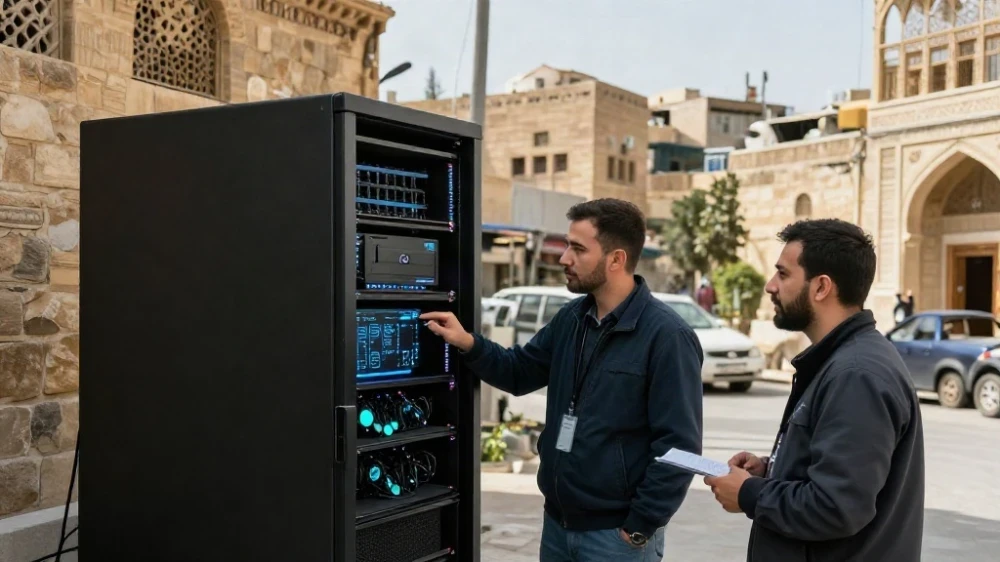
Digital Transformation and Cybersecurity Trends in Homs
penetration testing services in Homs are rapidly transforming how local businesses, manufacturing hubs, and emerging digital enterprises manage corporate risk in an increasingly interconnected global market. As organizations modernize their legacy operations, adopt hybrid cloud infrastructures, and deploy custom web applications, their digital attack surfaces expand exponentially. Advanced cyber threats no longer target strictly multinational financial institutions; today, regional commercial ventures in Homs face sophisticated threats ranging from ransomware attacks and credential stuffing to complex supply chain compromises. Ensuring corporate survival and continuous operational growth requires moving beyond passive defense measures, such as basic firewalls or antivirus installations, toward aggressive, proactive security evaluations that expose hidden infrastructure flaws before malicious actors can exploit them.
The contemporary threat landscape in the Middle East demands continuous surveillance and rigorous defensive validation. Organizations deploying penetration testing services in Homs leverage offensive security techniques to simulate real-world cyberattacks against their network perimeters, web applications, and internal enterprise environments. By identifying critical vulnerabilities—such as unpatched operating system bugs, misconfigured access controls, or weak database permissions—businesses achieve clear visibility into their security posture. Investing in top-tier penetration testing services in Homs ensures that corporate data, financial assets, and operational workflows remain protected against unexpected cyber disruptions, directly fostering an environment conducive to scalable enterprise development.

The Economic Impact of Cybersecurity on Regional Business Growth
Securing enterprise architecture through professional penetration testing services in Homs yields a substantial return on investment by preserving capital and building brand equity. A single security breach can result in severe financial consequences, including administrative remediation costs, operational downtime, legal liabilities, and irreparable damage to enterprise reputation. Modern commercial leaders recognize that robust cybersecurity operates as a business enabler rather than an administrative expense. When local enterprises secure their digital ecosystems through structured offensive assessments, they establish market trust, enabling them to form strategic partnerships with international investors and overseas business partners who mandate strict vendor security evaluations.
Furthermore, digital resilience directly accelerates innovation within expanding industrial and service sectors. Companies confident in their defensive architecture can aggressively pursue new digital initiatives, such as launching integrated customer portals, introducing real-time supply chain software, or implementing automated IoT manufacturing systems. By engaging specialized cybersecurity engineers to perform ethical hacking assessments, companies in Homs can identify structural flaws, prevent data loss, and maintain uninterrupted commercial operations. Leveraging professional penetration testing services in Homs provides executive management with the confidence needed to scale operations, introduce digital product offerings, and capitalize on regional market opportunities.
Vulnerability Assessment vs. Penetration Testing Services in Homs
Many business executives often conflate automated vulnerability scanning with dynamic offensive evaluations. While vulnerability assessments utilize automated tools to generate high-level inventories of known security gaps, comprehensive penetration testing services in Homs involve certified security researchers actively attempting to exploit discovered weaknesses. Ethical hackers utilize manual techniques, specialized scripts, and advanced threat intelligence to bypass security controls, validate real-world exploitability, and map out post-exploitation impact on business operations.
| Feature / Dimension | Automated Vulnerability Assessment | Penetration Testing Services in Homs |
|---|---|---|
| Primary Objective | Identify and list known security flaws automatically | Simulate real-world attacks and exploit vulnerabilities |
| Execution Method | Automated scanning software | Manual exploitation led by cybersecurity specialists |
| Depth of Analysis | Surface-level inventory of potential bugs | In-depth validation of business logic flaws and multi-stage exploits |
| False Positive Rate | Moderate to High (requires manual filtering) | Negligible (findings are verified via proof-of-concept) |
| Business Value | Establishes baseline patch management routines | Delivers actionable risk mitigation and strategic security posture enhancement |
Selecting automated scanners alone leaves companies exposed to complex multi-stage attack vectors and logic flaws that software cannot identify. By utilizing fully contextualized penetration testing services in Homs, enterprise IT directors receive a clear, prioritized roadmap that delineates urgent risks from low-impact anomalies. This structured approach ensures efficient allocation of internal remediation resources toward patching critical business-logic weaknesses before sophisticated threat groups discover them.
TaraCyber’s Strategic Methodology for Cybersecurity Excellence
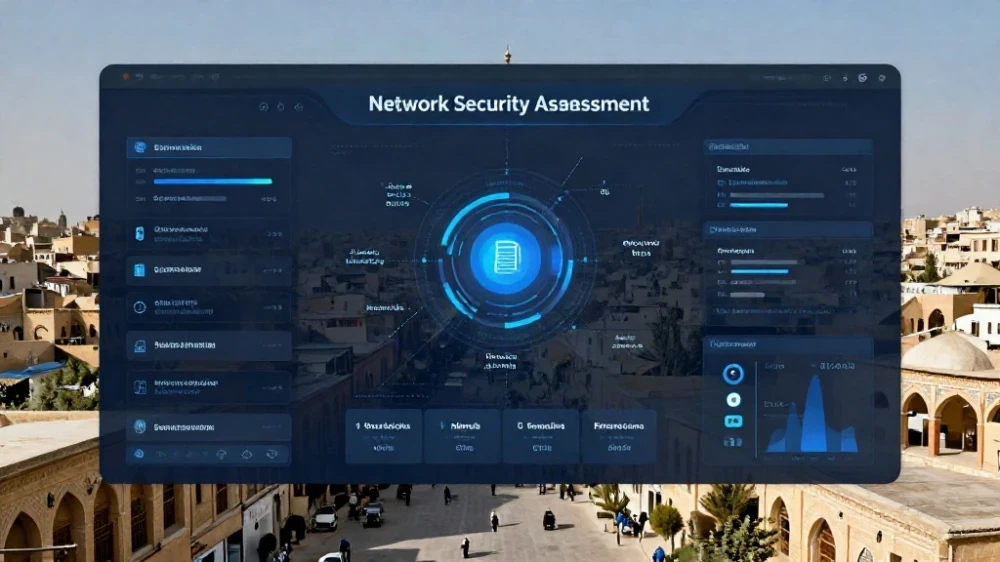
Delivering high-value cybersecurity security testing requires adhering to standardized, internationally recognized methodologies. According to established cybersecurity standards framed by organizations like NIST Security Standards, structured frameworks are essential for systematic threat evaluation. At TaraCyber, offensive assessments follow strict execution methodologies designed to minimize operational impact while uncovering structural weaknesses across network assets, web applications, and physical access points.
The engagement framework for delivering professional penetration testing services in Homs involves meticulous planning, active reconnaissance, target exploitation, and post-exploitation reporting:
- Scoping and Reconnaissance: Defining clear rules of engagement, target IP ranges, subdomains, and operational boundaries while gathering public intelligence on the organization’s attack surface.
- Threat Modeling and Vulnerability Discovery: Utilizing automated scanners and manual analysis to identify open ports, misconfigured services, outdated software versions, and authentication flaws.
- Active Exploitation: Safely executing ethical hacks to bypass defense mechanisms, gain privileges, and assess the depth of potential network compromise without causing system downtime.
- Impact Analysis and Reporting: Documenting successful exploit chains, evaluating real-world business risks, and providing step-by-step remediation guidance for internal technical teams.
- Remediation Verification: Re-testing patched systems to confirm that all identified security gaps have been successfully closed and verified.
Implementing rigorous penetration testing services in Homs helps enterprise networks maintain resilience against persistent operational threats, ensuring critical business applications remain protected against evolving attack methodologies.
Tailored Penetration Testing Services in Homs Across Business Sectors
Different commercial industries face distinct risk profiles based on their technical infrastructure and regulatory exposure. Consequently, penetration testing services in Homs are tailored to address the operational realities of key economic sectors across the region:
1. Financial Institutions and Commercial Banking
Modern banking platforms rely heavily on secure mobile applications, core banking APIs, and payment gateways. Specialized penetration testing services in Homs evaluate financial infrastructure for web application logic flaws, unauthorized transaction manipulation vulnerabilities, and sensitive payment data leakage. Identifying these risks ensures compliance with financial data security mandates while maintaining public trust.
2. Industrial Manufacturing and Supply Chain Operations
Industrial facilities depend on interconnected Operational Technology (OT) and Supervisory Control and Data Acquisition (SCADA) networks. Attacks targeting these operational assets can halt manufacturing operations, damage equipment, or disrupt distribution networks. Securing operational technology through targeted penetration testing services in Homs helps manufacturers isolate IT perimeters from critical plant machinery, preventing external threat actors from pivoting into production systems.
3. E-Commerce and Enterprise Web Applications
Online retailers handle massive volumes of customer data, payment credentials, and transaction histories. External attack assessments target web portals to identify cross-site scripting (XSS), SQL injection, unauthenticated access routes, and session management flaws. Deploying reliable penetration testing services in Homs protects customer privacy, secures checkout systems, and maintains continuous store availability during high-traffic commercial periods.
4. Telecommunications and Enterprise IT Service Providers
As central communications providers, telecommunications firms manage massive network backbones handling voice, data, and critical communication channels. Securing these service providers through robust penetration testing services in Homs ensures core infrastructure resilience, preventing wide-scale service outages and protecting sensitive customer metadata against dynamic intercept threats.

Ensuring Compliance and Data Privacy Standards
Global data protection laws and industry frameworks mandate that organizations prove they take adequate measures to defend sensitive data. Conducting annual or semi-annual penetration testing services in Homs provides board members and executive stakeholders with formal audit reports verifying corporate cybersecurity readiness. International certifications such as ISO/IEC 27001, PCI-DSS, and regional cybersecurity mandates require companies to demonstrate routine defensive testing performed by qualified third-party specialists.
Relying on specialized penetration testing services in Homs streamlines regulatory compliance, simplifying security audits and preventing costly regulatory non-compliance penalties. A third-party security assessment provides an objective, unvarnished evaluation of corporate defenses, eliminating operational blind spots and verifying that technical controls perform effectively under real-world stress conditions.
Ultimately, high-quality penetration testing services in Homs serve as a foundation for sustained enterprise growth. Partnering with elite cybersecurity experts at TaraCyber empowers businesses to secure digital assets, build market credibility, and maintain uninterrupted operational expansion in an increasingly complex digital landscape.
Frequently Asked Questions
Why do companies require professional penetration testing services in Homs?
Professional security assessments allow organizations to proactively discover and repair critical infrastructure vulnerabilities before cybercriminals can exploit them. Performing offensive security engagements protects proprietary enterprise data, maintains continuity of operations, safeguards financial assets, and enforces legal data compliance across regional commercial sectors.
How often should an enterprise execute network penetration testing?
Industry best practices recommend scheduling comprehensive security evaluations at least once per year. Additionally, organizations should engage certified ethical hackers whenever deploying significant software updates, expanding network perimeters, integrating cloud infrastructure, or undergoing major corporate restructuring.
Will conducting a simulated cyberattack disrupt daily business operations?
No. Professional ethical security tests are designed to prevent operational disruption. Cybersecurity specialists coordinate closely with internal IT administrators, establishing precise rules of engagement, defining safe operational windows, and utilizing non-destructive exploitation strategies to ensure zero operational downtime during testing phases.
Cybersecurity Services in Riyadh: 7 Powerful Solutions for Leading Protection 2026