Table of Contents
- Introduction to Cyber Resilience and Digital Forensics Services in Homs
- Why Organizations Require Professional Digital Forensics Services in Homs
- Step-by-Step Practical Roadmap for Implementing Digital Forensics Infrastructure
- Key Challenges in Enterprise Cyber Incident Investigations
- Selecting the Ideal Provider for Digital Forensics Services in Homs
- Frequently Asked Questions (FAQ)
Introduction to Cyber Resilience and Digital Forensics Services in Homs
As modern enterprises across Syria undergo rapid technological modernization, securing corporate data networks and critical digital infrastructure has become a paramount priority. Organizations operating in various commercial, industrial, and institutional sectors face an increasingly sophisticated threat landscape. Implementing reliable digital forensics services in homs is no longer just a reactive measure after a data breach; it is a vital component of holistic enterprise risk management and incident readiness in 2026.
Digital forensics provides the methodology, tools, and legal frameworks needed to investigate cybercrime, trace unauthorized access, recover lost digital assets, and preserve court-admissible evidence. When modern enterprises integrate structured digital investigation procedures into their security architecture, they significantly reduce operational downtime and safeguard sensitive operational intellectual property. Investing in premier digital forensics services in homs enables organizations to pinpoint security vulnerabilities, contain ongoing attacks, and maintain business continuity even during complex cyber crisis scenarios.
Why Organizations Require Professional Digital Forensics Services in Homs
In an era where ransomware, advanced persistent threats (APTs), and insider data theft pose daily hazards to business stability, specialized investigative capabilities are essential. Generic IT department troubleshooting often fails when dealing with sophisticated threat actors who meticulously cover their tracks, delete event logs, or use encrypted communication channels to exfiltrate corporate intelligence.
Engaging trusted digital forensics services in homs guarantees that data recovery and threat analysis follow strict international forensic protocols. Certified forensic specialists do not simply restore corrupted systems; they perform deep-level analysis of volatile memory (RAM), disk images, unallocated storage spaces, and network packet captures to reconstruct the exact timeline of a security breach.
Furthermore, by deploying specialized digital forensics services in homs, enterprise leadership gains actionable insights required for administrative disciplinary actions, insurance claims, and legal proceedings. Understanding how an attacker breached the network firewall, escalated privileges, and lateralized across local servers equips security teams with the knowledge necessary to harden digital perimeters against future intrusion vectors.

Step-by-Step Practical Roadmap for Implementing Digital Forensics Infrastructure
Establishing an enterprise-grade digital investigation and incident response framework requires a systematic approach. Companies must transform their passive IT defenses into active, forensically sound environments capable of handling complex digital investigations. Below is a practical step-by-step implementation roadmap tailored for enterprise deployments.
Step 1: Digital Asset Auditing and Readiness Assessment
Before an incident occurs, organizations must establish a comprehensive catalog of all digital assets, including on-premise servers, cloud repositories, network routers, endpoint devices, and database systems. Securing expert digital forensics services in homs begins with assessing the current log-retention policies and system auditing settings across the entire organizational network.
Security teams should verify that centralized logging solutions—such as Security Information and Event Management (SIEM) systems—are actively aggregating event logs, authentication attempts, and network traffic metadata. Establishing baseline behaviors for normal operational activities makes anomaly detection faster and far more accurate during an active investigation.
Step 2: Securing Chain of Custody and Evidence Retention Frameworks
Digital evidence is extraordinarily fragile. Improperly powering down an infected machine or running standard anti-virus scans can permanently alter volatile RAM data or overwrite vital timestamps on system files. Partnering with professional digital forensics services in homs helps organizations establish standardized Standard Operating Procedures (SOPs) for evidence handling.
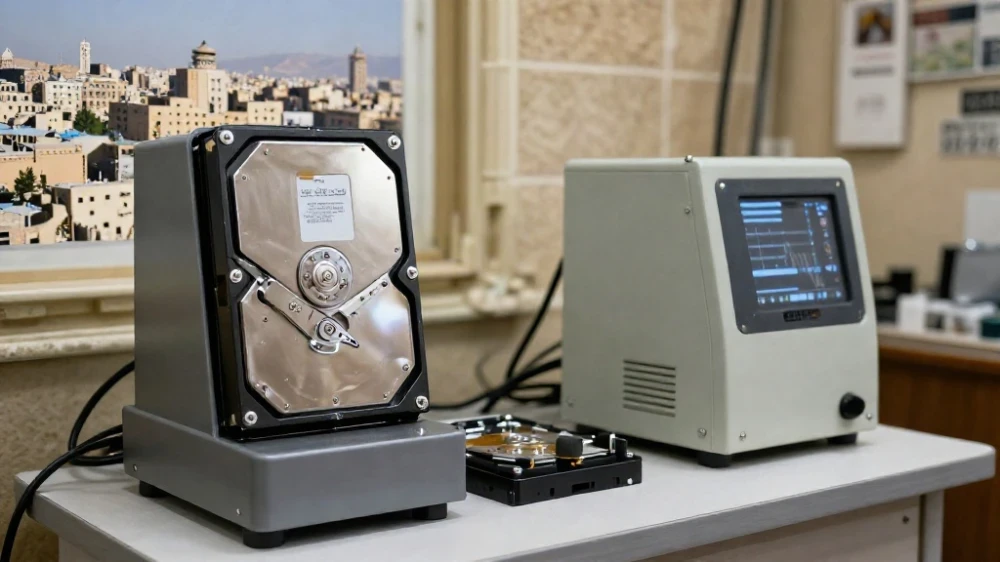
A forensically sound workflow mandates the immediate isolation of impacted systems from the network, followed by BitStream physical disk imaging using specialized write-blocking hardware. Maintaining a strict Chain of Custody document ensures that every piece of digital evidence—from drive hashes (SHA-256) to memory dumps—is meticulously tracked, documented, and protected against claims of evidence contamination or tampering.
Step 3: Integrating Enterprise Incident Response Workflows
Forensic readiness must be seamlessly combined with an active Incident Response Plan (IRP). When an intrusion is detected, the primary objective shifts to containment without compromising forensic artifacts. Utilizing certified digital forensics services in homs minimizes downtime by deploying remote endpoint triage tools that collect volatile system artifacts across distributed networks simultaneously.
An effective incident response framework establishes designated roles: first responders who preserve the digital crime scene, forensic analysts who perform root-cause analysis, and executive communication leads who coordinate reporting. According to global operational standards published by the Digital Forensics Framework standards, standardized triage procedures dramatically decrease mean time to detect (MTTD) and mean time to respond (MTTR).
Step 4: Leveraging Advanced Forensic Tools and Threat Intelligence
Enterprise forensic labs rely on sophisticated hardware and software toolkits to parse massive volumes of unstructured data. Modern digital forensics services in homs utilize advanced memory analysis frameworks, reverse-engineering sandboxes, and registry parsing software to identify stealthy malware, rootkits, and fileless threat vectors.
By correlating collected Indicators of Compromise (IoCs)—such as suspicious IP addresses, malicious domain names, or unique file hashes—with global threat intelligence feeds, forensic experts can identify the specific threat group responsible for the breach. This intelligence-driven approach allows security engineers to craft targeted countermeasures and eradicate adversary persistence mechanisms from the network.

Key Challenges in Syrian Enterprise Cyber Incident Investigations
Conducting digital investigations within the local commercial landscape presents distinct technical and logistical challenges. Enterprise infrastructure often combines legacy legacy systems with modern cloud services, creating hybrid environments where tracking lateral movement requires cross-platform technical expertise.
Additionally, bandwidth limitations and localized infrastructure constraints can complicate large-scale remote data acquisition during emergency response operations. Accessing structured digital forensics services in homs bridges the gap by delivering localized, on-site response capabilities equipped with portable forensic workstations and high-speed write-blocked acquisition units. This local operational presence guarantees rapid deployment when time is critical.
Selecting the Ideal Provider for Digital Forensics Services in Homs
Selecting the right technical partner is critical to ensuring that your organization is fully prepared for emerging cyber threats. A premier digital forensic partner should possess certified forensic examiners (such as EnCE, GCFE, or CHFI), cutting-edge laboratory facilities, and proven experience in handling complex corporate investigations.
When evaluating digital forensics services in homs, organizations must look beyond emergency response to consider proactive solutions like compromise assessments, insider threat monitoring, and forensic readiness training for internal staff. For comprehensive technical support, enterprise threat hunting, and specialized incident mitigation, organizations can rely on comprehensive cybersecurity and digital forensics solutions tailored to protect critical corporate infrastructures.

Frequently Asked Questions (FAQ)
What is the primary difference between standard IT support and professional digital forensics?
Standard IT support focuses on maintaining system availability, fixing software errors, and restoring normal operational workflows. In contrast, top digital forensics services in homs focus on scientifically gathering, preserving, and analyzing digital evidence without altering system state, identifying the root cause of an intrusion, and ensuring that all findings meet legal standards for formal investigations or court proceedings.
How quickly should an organization initiate digital forensic procedures after a breach?
Immediate action is crucial. Volatile memory (RAM) and system event logs can be overwritten within minutes or hours during normal computer operations. Engaging leading digital forensics services in homs immediately upon suspecting a security incident ensures that volatile evidence is captured, threat actors are contained, and critical breach artifacts are preserved before attackers can destroy their digital footprint.
Can digital forensics recover files that were deliberately deleted by an insider threat?
Yes. Specialized forensic methodologies allow examiners to recover deleted files, unallocated cluster data, temporary system caches, and volume shadow copies, even if an insider attempt was made to wipe or overwrite local storage media. Expert forensic analysts reconstruct file master tables to restore deleted intellectual property and trace user activities back to specific physical or virtual endpoints.