Table of Contents
- Understanding Istanbul’s Digital Threat Landscape in 2026
- Why Businesses Need Managed Cybersecurity Services in Istanbul
- Core Technical Solutions in Modern Business Defense
- Evaluating Enterprise Cybersecurity Services in Istanbul: A Strategic Framework
- Real-World Implementation: Safeguarding Enterprise Infrastructure
- How to Choose the Right Cybersecurity Partner
- Frequently Asked Questions
Understanding Istanbul’s Digital Threat Landscape in 2026
As Turkey’s primary commercial, financial, and technological powerhouse, Istanbul sits at the crossroads of global digital transformation. In 2026, enterprises operating in this vibrant metropolis face an increasingly complex cyber threat environment. From sophisticated ransomware attacks targeting regional logistics networks to zero-day vulnerabilities aimed at financial institutions, securing corporate assets has evolved from an IT task into a core business imperative. Modern enterprises actively seeking elite Cybersecurity Services in Istanbul to defend their digital footprint must navigate technical complexity, regulatory demands, and sophisticated adversary tactics.
The acceleration of cloud migration, remote work architectures, and IoT adoption across industrial zones has expanded the attack surface for organizations of all sizes. Sophisticated threat actors no longer target only multinational corporations; small and medium-sized enterprises (SMEs) serving as vendors in supply chains are frequently leveraged as entry points. Consequently, adopting a proactive, intelligence-led defense model is essential for preserving business continuity and operational integrity.
Why Businesses Need Managed Cybersecurity Services in Istanbul
Managing digital risk internally requires continuous capital investment, high-end infrastructure, and access to highly specialized talent. With global skill shortages in cybersecurity, investing in comprehensive Cybersecurity Services in Istanbul ensures that enterprises receive enterprise-grade protection without the overhead of building a fully staffed 24/7 Security Operations Center (SOC) from scratch.
Local businesses operate under unique regulatory requirements, such as the Turkish Personal Data Protection Law (KVKK), alongside international standards like GDPR. Securing sensitive customer information while remaining fully compliant demands deep regional expertise coupled with global technical standards. As corporate networks become more interconnected, the demand for specialized Cybersecurity Services in Istanbul has surged among organizations looking to establish resilient security postures.
Furthermore, rapid incident response capabilities are non-negotiable. When a breach occurs, every minute of operational downtime translates into financial loss and reputational damage. Organizations requiring specialized incident investigation can leverage professional digital forensics services to analyze breach vectors, reconstruct malicious activities, and remediate systemic vulnerabilities before attackers can cause irreversible harm.
Core Technical Solutions in Modern Business Defense
A multi-layered defense model is mandatory for modern enterprises. Relying solely on perimeter firewalls or basic antivirus tools leaves critical corporate assets vulnerable to sophisticated lateral movement and advanced persistent threats (APTs). Enterprise-grade security strategies integrate several core operational pillars:
1. Penetration Testing and Vulnerability Assessments
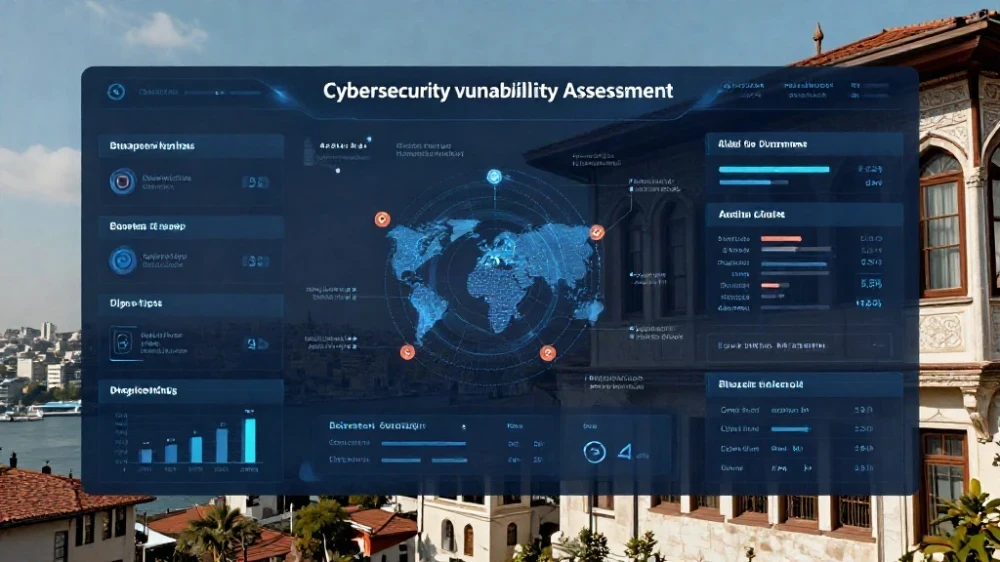
Proactive security begins with understanding your weaknesses before malicious actors do. Comprehensive penetration testing simulates real-world cyberattacks against web applications, network infrastructure, wireless systems, and cloud environments. By identifying misconfigurations, unpatched systems, and logic flaws, organizations can prioritize remediation efforts based on actual business risk.
2. 24/7 Managed Detection and Response (MDR)
Threat detection requires continuous oversight. Modern Cybersecurity Services in Istanbul combine continuous telemetry monitoring, artificial intelligence, and human threat hunting to identify anomalous behavior in real time. Managed Detection and Response (MDR) platforms monitor endpoints, servers, and cloud workloads to isolate infected devices within minutes of detection.
According to research guidelines published by NIST (National Institute of Standards and Technology), implementing a structured framework for detection and response reduces containment time significantly and minimizes impact on critical operational workflows.
3. Cloud Security Governance
As organizations move infrastructure to multi-cloud environments (such as AWS, Microsoft Azure, and Google Cloud), security configurations often lag behind deployment speed. Cloud posture management ensures identity and access management (IAM) policies are tightly controlled, data buckets are encrypted, and container environments remain secure throughout the software development lifecycle.
4. Identity and Access Management (IAM) & Zero Trust Architecture
The traditional perimeter is obsolete. Under a Zero Trust model, identity serves as the new control boundary. Implementing strict Multi-Factor Authentication (MFA), Least Privilege Access policies, and continuous session verification ensures that even if credentials are compromised, unauthorized access across the enterprise network is severely restricted.
Evaluating Enterprise Cybersecurity Services in Istanbul: A Strategic Framework
Choosing the right technical solution requires a systematic evaluation of your organization’s technical maturity, threat model, and operational requirements. Premier Cybersecurity Services in Istanbul offer custom SLAs and technical architectures aligned with specific business models. Decision-makers should evaluate potential solutions across four key dimensions:
| Evaluation Criteria | Key Focus Areas | Business Impact |
|---|---|---|
| Technical Capabilities | EDR/XDR coverage, Automated SOAR, AI Threat Intelligence | Faster containment, reduced human error, rapid threat mitigation |
| Compliance Alignment | KVKK, GDPR, ISO 27001, PCI-DSS compliance support | Avoidance of regulatory fines and legal liabilities |
| Operational SLAs | Mean Time to Detect (MTTD), Mean Time to Respond (MTTR) | Guaranteed response speeds during active security breaches |
| Scalability & Flexibility | Cloud-native integration, hybrid network architecture support | Seamless security growth alongside expanding enterprise operations |
Evaluating Cybersecurity Services in Istanbul against these metrics helps corporate leaders make informed technology investments that safeguard operational capability without creating unnecessary technical friction for employees.
Real-World Implementation: Safeguarding Enterprise Infrastructure
Consider a mid-sized e-commerce and logistics firm operating across Istanbul and regional distribution hubs. The enterprise handled tens of thousands of customer transactions daily, relying on a complex hybrid cloud infrastructure. During a routine audit, security analysts identified multiple unpatched API endpoints, weak access controls on storage servers, and an absence of centralized logging.
By engaging structured Cybersecurity Services in Istanbul, the enterprise undertook a complete security transformation:
- Phase 1: Deep Assessment: Red team specialists conducted black-box penetration testing, uncovering zero-day configuration flaws in third-party API gateways.
- Phase 2: Zero Trust Implementation: The firm deployed continuous identity verification across all remote access channels and enforced strict privilege boundaries on critical databases.
- Phase 3: SOC Integration: 24/7 Managed Detection and Response was connected to all cloud environments and physical endpoints, establishing full visibility over corporate data flow.
Within weeks of implementation, an attempted supply-chain credential attack was automatically detected and isolated within four minutes, averting potential data exposure and saving millions in regulatory fines and operational disruption. Adopting specialized Cybersecurity Services in Istanbul allowed the company to preserve customer trust while continuing its aggressive digital expansion.

How to Choose the Right Cybersecurity Partner
Selecting a cybersecurity provider is a strategic partnership rather than a routine vendor procurement. Leading Cybersecurity Services in Istanbul mitigate risk by acting as an extension of your internal team. When conducting vendor assessments, consider the following evaluation steps:
- Verify Industry Certifications: Ensure the vendor’s engineers hold globally recognized credentials such as CISSP, CISM, CEH, and OSCP.
- Assess Incident Response Capabilities: Request clear Service Level Agreements (SLAs) regarding breach response times and threat containment workflows.
- Analyze Customization Options: Avoid generic, one-size-fits-all packages. Choose a vendor capable of tailoring technical controls to your unique technology stack and operational workflow.
- Review Compliance Experience: Verify that the partner possesses hands-on expertise with both local regulations (KVKK) and international data protection standards.
When selecting Cybersecurity Services in Istanbul, decision-makers must prioritize technical rigor, operational transparency, and proven expertise in mitigating modern cyber threats. Securing digital infrastructure today ensures resilient commercial growth tomorrow.

Frequently Asked Questions
What are the primary benefits of outsourcing Cybersecurity Services in Istanbul?
Outsourcing technical defense provides immediate access to high-level security expertise, 24/7 threat monitoring, and enterprise-grade tools without the extensive overhead of recruiting and maintaining an internal security team. Furthermore, top-tier Cybersecurity Services in Istanbul provide local regulatory alignment and rapid on-site or remote incident response capability.
How do cybersecurity solutions ensure compliance with KVKK and GDPR?
Cybersecurity solutions maintain regulatory compliance by implementing data encryption at rest and in transit, strict access controls, continuous data loss prevention (DLP) monitoring, and detailed audit logging. Adopting Cybersecurity Services in Istanbul helps organizations systematically identify sensitive data stores and maintain compliance with Turkish data protection legislation.
What is the difference between traditional antivirus software and Managed Detection and Response (MDR)?
Traditional antivirus relies primarily on known file signatures to block static malware threats. Managed Detection and Response (MDR) utilizes behavioral analysis, machine learning, continuous telemetry monitoring, and expert human analysis to detect fileless attacks, lateral movement, and advanced persistent threats in real time across the entire business network.